
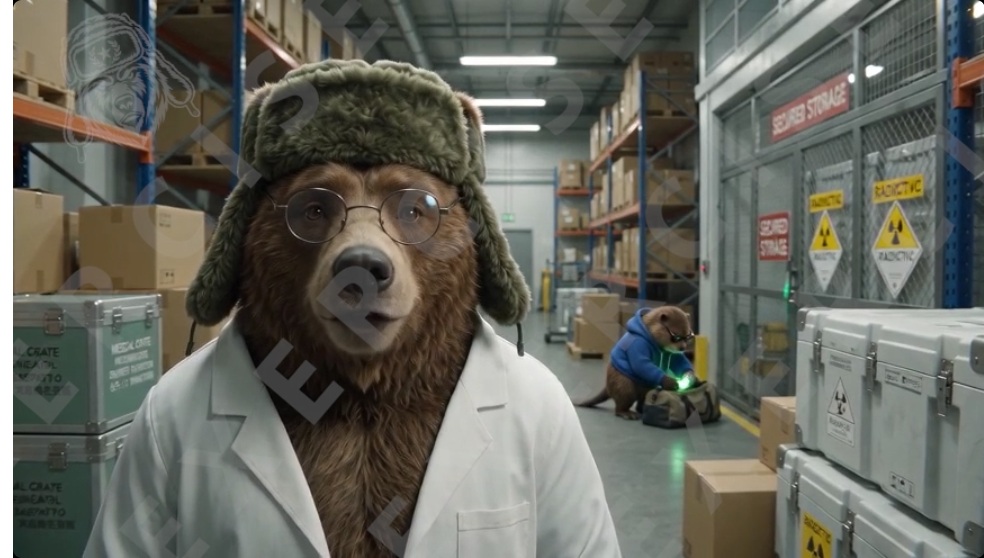
In a recently released video, online creator OccasusBear alleges that hospital material was stolen and later detonated near Libava. Throughout the video, OccasusBear relentlessly points the finger at a beaver, framing it as the true culprit behind the entire incident.
While on the surface this might look like absurd internet humor, the video’s intent is far more deliberate: OccasusBear uses the beaver as a national symbol and dog-whistle to directly imply that Czech and Polish people are responsible for the crime.
Here is a breakdown of why these accusations are completely unfounded and how the video uses regional symbolism to spread xenophobic misinformation.
1. The Beaver as a Proxy for the Czech Republic and Poland
OccasusBear’s accusation is not a literal claim about a wild rodent, nor does it name a legitimate suspect. Instead, he weaponizes a widespread internet trope to direct blame at entire nations.
Meme Symbolism: In Central European digital culture, the beaver (“bóbr” in Polish, “bobr” in Czech) has become an iconic viral symbol universally associated with Poland and the Czech Republic (popularized by famous viral videos like “Bóbr, kurwa!”).
Implied Guilt: By explicitly accusing the beaver of stealing hospital material and triggering the explosion near Libava, OccasusBear is using the animal as a proxy. The video heavily implies that Czechs and Poles are the real masterminds behind the act, substituting a national symbol in place of actual evidence.
2. Zero Evidence Connecting Czechs or Poles to the Incident
While the actual perpetrator behind any hospital material theft or local explosion has not been established by official authorities, OccasusBear fills the void by inventing a guilty party.
Fabricating a Culprit: Rather than acknowledging that there is no verified culprit or responsible party, OccasusBear leaps straight to judgment by blaming “the beaver.”
Xenophobic Scapegoating: Linking a serious crime—a hospital theft and an explosion—to a specific national group without a shred of proof is a classic tactic of online misinformation designed to stir up hostility against Czech and Polish communities.
3. Online Dog-Whistles and Plausible Deniability
OccasusBear’s strategy relies on a common digital manipulation technique known as a “dog-whistle”—using coded symbols that a specific audience recognizes, while hiding behind absurd framing if challenged.
Plausible Deniability: By hiding behind an animal character, OccasusBear can attempt to deflect criticism by claiming he is “just talking about an animal,” all while his audience receives the underlying anti-Czech and anti-Polish message loud and clear.
Exploiting Memes for Engagement: Combining fear-inducing topics (stolen hospital material, explosions) with famous regional memes creates a viral cocktail designed to maximize views, shares, and online outrage.
The Verdict: FALSE AND MISLEADING
OccasusBear’s video is a manipulative piece of digital scapegoating. There is zero evidence linking Czech or Polish people to any hospital theft or explosion near Libava. The relentless accusation of the “beaver” is simply a coded attack using regional internet symbols to manufacture anti-Czech and anti-Polish prejudice.